Pace vs Speed: What Runners Need to Know
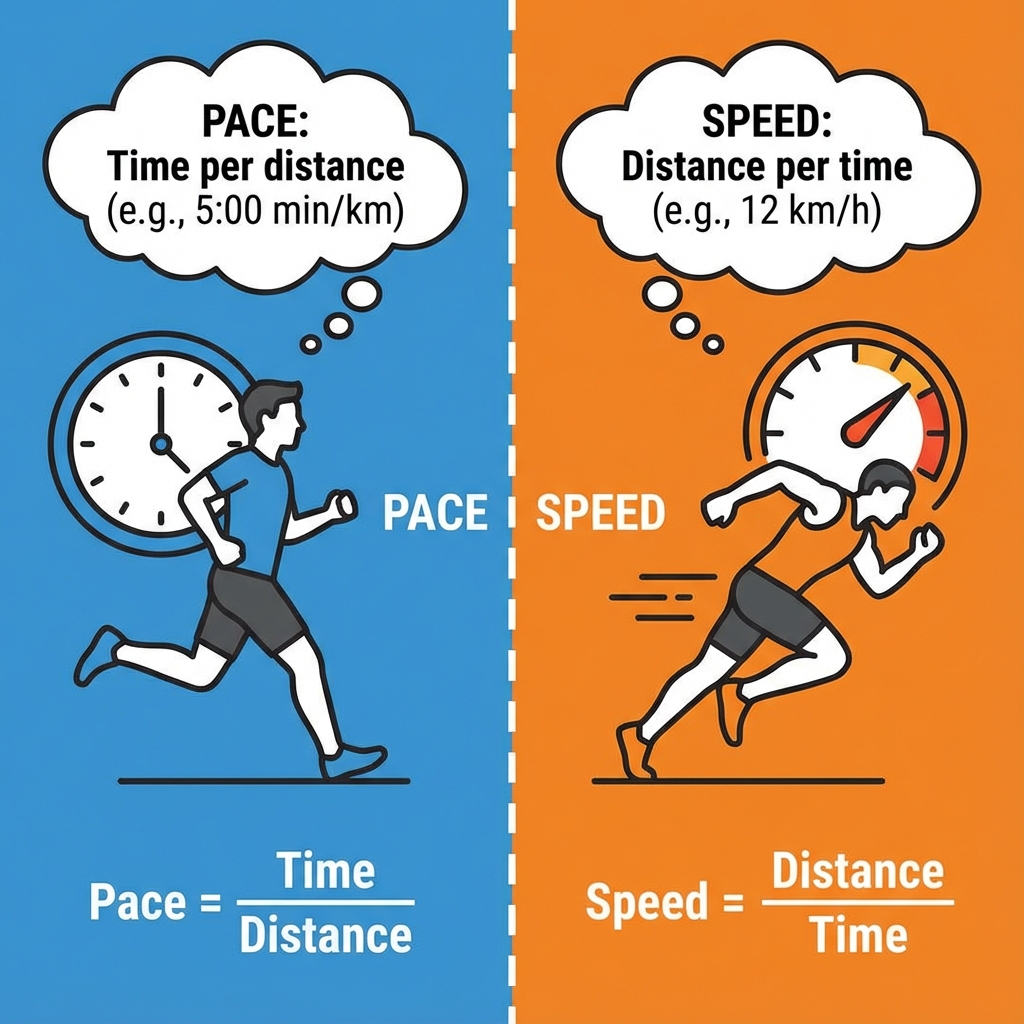
In the world of running, you'll hear two terms thrown around constantly: pace and speed. While they both measure how fast you're moving, they do so in opposite ways. Understanding the difference is key to following training plans and tracking your performance correctly.
The Core Difference
Pace
Time per Distance
Example: 5:00 min/km
"It takes me 5 minutes to run 1 kilometer."
Lower number = Faster
Speed
Distance per Time
Example: 12 km/h
"I run 12 kilometers in 1 hour."
Higher number = Faster
Why Runners Use Pace
Cyclists and cars use speed (km/h or mph). But runners almost exclusively use pace. Why?
Because running distances are fixed (5K, 10K, Marathon), and we want to know how long it will take to finish.
- If you know your pace is 6:00 min/km, you instantly know a 5K will take 30 minutes (6 × 5).
- If you knew your speed was 10 km/h, the mental math to find your 5K time (5 ÷ 10 = 0.5 hours = 30 mins) is slightly harder while running!
Conversion Chart
Here is a quick reference to convert between common paces and speeds:
| Pace (min/km) | Speed (km/h) | 5K Time |
|---|---|---|
| 3:00 | 20.0 | 15:00 |
| 4:00 | 15.0 | 20:00 |
| 5:00 | 12.0 | 25:00 |
| 6:00 | 10.0 | 30:00 |
| 7:00 | 8.6 | 35:00 |
How to Convert Manually
Want to convert pace to speed yourself?
Speed (km/h) = 60 / Pace (minutes)
Example: Pace is 6:00 min/km.
Speed = 60 / 6 = 10 km/h.
Note: If your pace has seconds (e.g., 5:30), convert it to decimal minutes first (5.5) before dividing.
Which One Should You Use?
- Use Pace for road running, track workouts, and race planning. It's the standard language of runners.
- Use Speed for treadmill running (most treadmills display speed) or if you are cross-training with cycling.